Platform Architecture
This section gives you the mental model you need before you start building. By the end of these three pages you will understand Propeller's data model, know which API to use for what and have your API credentials ready.

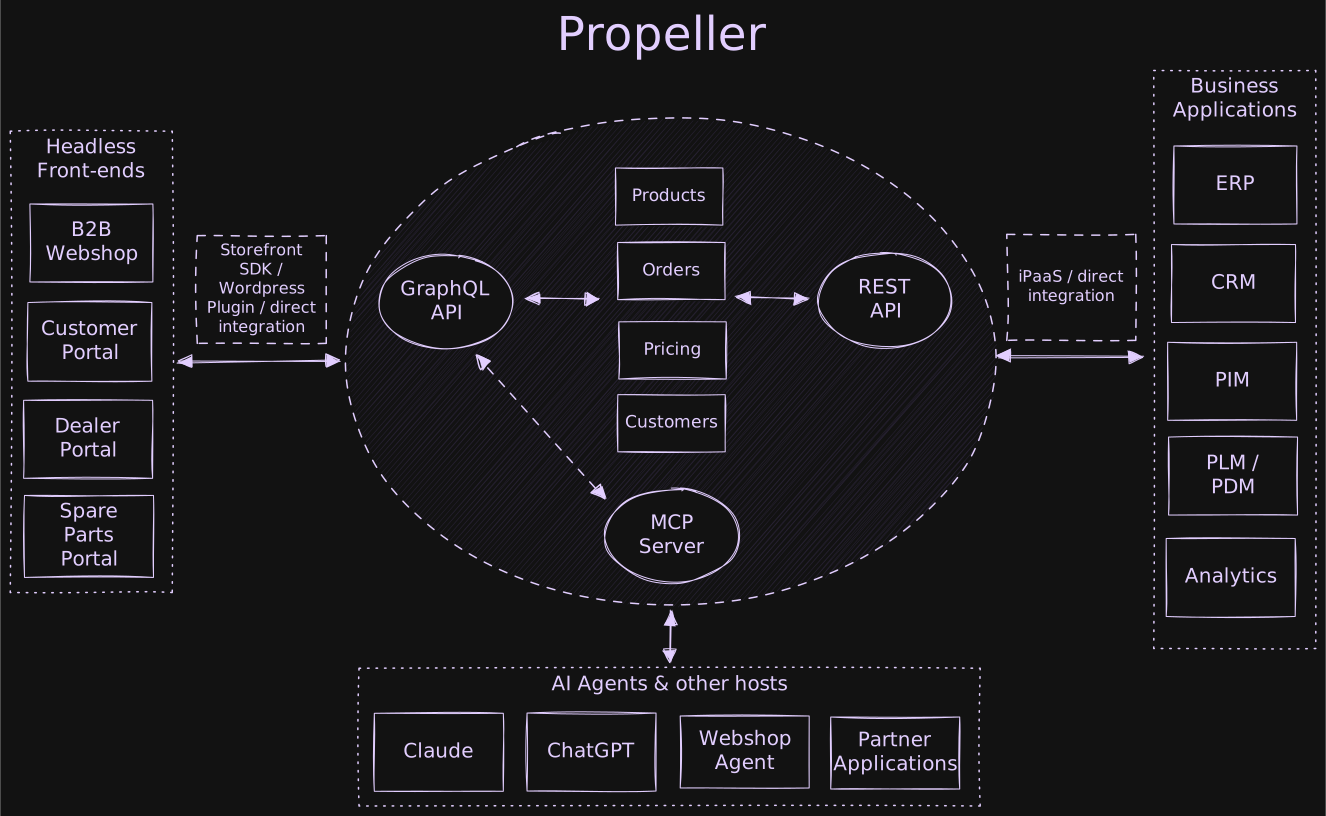
API surfaces
The GraphQL API is the frontend API. Partners use it to build customer-facing experiences: webshops, B2B customer portals and self-service ordering interfaces. The Storefront SDK (Next.js) and WordPress Plugin are both built on the GraphQL API. Partners building fully custom frontends in other frameworks also use GraphQL directly.
The REST API is the integration API. Partners use it to connect Propeller with backend business applications: ERP systems, PIM, CRM and other operational tools. These integrations handle product sync, order flow, inventory management, customer data and pricing.
The MCP Server is the AI agent API. It lets AI agents and other MCP-compatible hosts interact with Propeller data programmatically.
Platform components
| Component | Type | Description |
|---|---|---|
| GraphQL API | Open API | GraphQL interface for flexible data querying and mutations |
| REST API | Open API | REST endpoints for platform integration |
| MCP Server | Open API | MCP interface for AI agents and MCP-compatible hosts |
| Storefront SDK | NPM Package | SDK built on the GraphQL API with pre-built components |
| WordPress Plugin | Frontend Plugin | Plugin for quickly setting up a B2B customer portal on WordPress |
| Backoffice | Frontend UI | Platform management interface for B2B commerce logic |
| Sales Hub | Frontend UI | Interface for sales reps to manage quotes, orders, companies and contacts |
How it fits together
Most implementations involve two primary workstreams:
- Frontend development using the GraphQL API (directly or through the Storefront SDK or WordPress Plugin) to build the customer-facing experience
- Integration development using the REST API to keep product data, pricing and orders in sync with backend systems
The AI agent layer is an additional surface that partners can adopt independently of the other two workstreams.
Next: Core Concepts
Learn the key data model concepts before you start making API calls.